Showing posts with label Writing. Show all posts

Monday, 28 March 2022

My Book Review for Stagdale Part 2 written and illustrated by Frances Castle


Reviewed by Karl Anderson Foster in November 2021.
Frances Castle's website https://www.francescastle.com 

Writing in a diary is a really strange experience for someone like me. Not only because I’ve never written anything before, but also because it seems to me that later on neither I nor anyone else will be interested in the musings of a thirteen-year old school girl. Oh well, it doesn’t matter. I feel like writing.

The Diary of Anne Frank


What comes to one’s mind when one is reminded of things remembered past?

In the second part of the graphic novel Stagdale, the setting is the bitter cold autumn of 1938. The air is still apart from the noise of a burning city just beyond the doors of our protagonist Max’s home. Max and his family face an impossible situation, all is not well. It is Kristallnacht a time of grave danger in Germany for many peoples.


The days after Kristallnacht Max and his family try to remain calm as they are imprisoned in their home apart from fraught trips to gather essential supplies. While his mother concentrates on making a home for them, Max watches a world outside that he no longer understands. We know how he is feeling because he writes about it in his diary that he has been asked to keep in order to practice the English language.


Max is uprooted from Berlin due to the rise of the Nazi party and its followers in Germany. We are witness to his gruelling journey across national borders during a period of extreme nationalism that will bring the world to its knees. Max is on his way to Stagdale, England though he doesn’t know it yet.


I think that the A5 landscape format works even better in Part 2 of the series as it reminds me of old photographs spread out in front of me as you try to knit together the stories of family and friends. Again Castle’s’ illustrations are a treat for the eyes and it’s the beautifully crafted details that evoke a time long gone by but they are still modern and prescient. The drawing style and character design of this complex world combines modulated lines with delicate textures juxtaposed with faded colours and sombre earthy tones.


Two scenes in particular leave me with anxiety in my chest and then a lump in my throat. When the Soldiers come to take Max and his parents away at the start of the story. You wonder if things will be over before we start and when Max says goodbye to his parents at the train station before embarking on the Kinder Transport. Max’s train journey fills one with a sense of the danger as our youngster leaves the bosom of the family for the truly unknown. Border guards are genuinely scary and unpleasant. Max has to learn how to survive fast as he realises that his wits are all that stand between him and calamity.

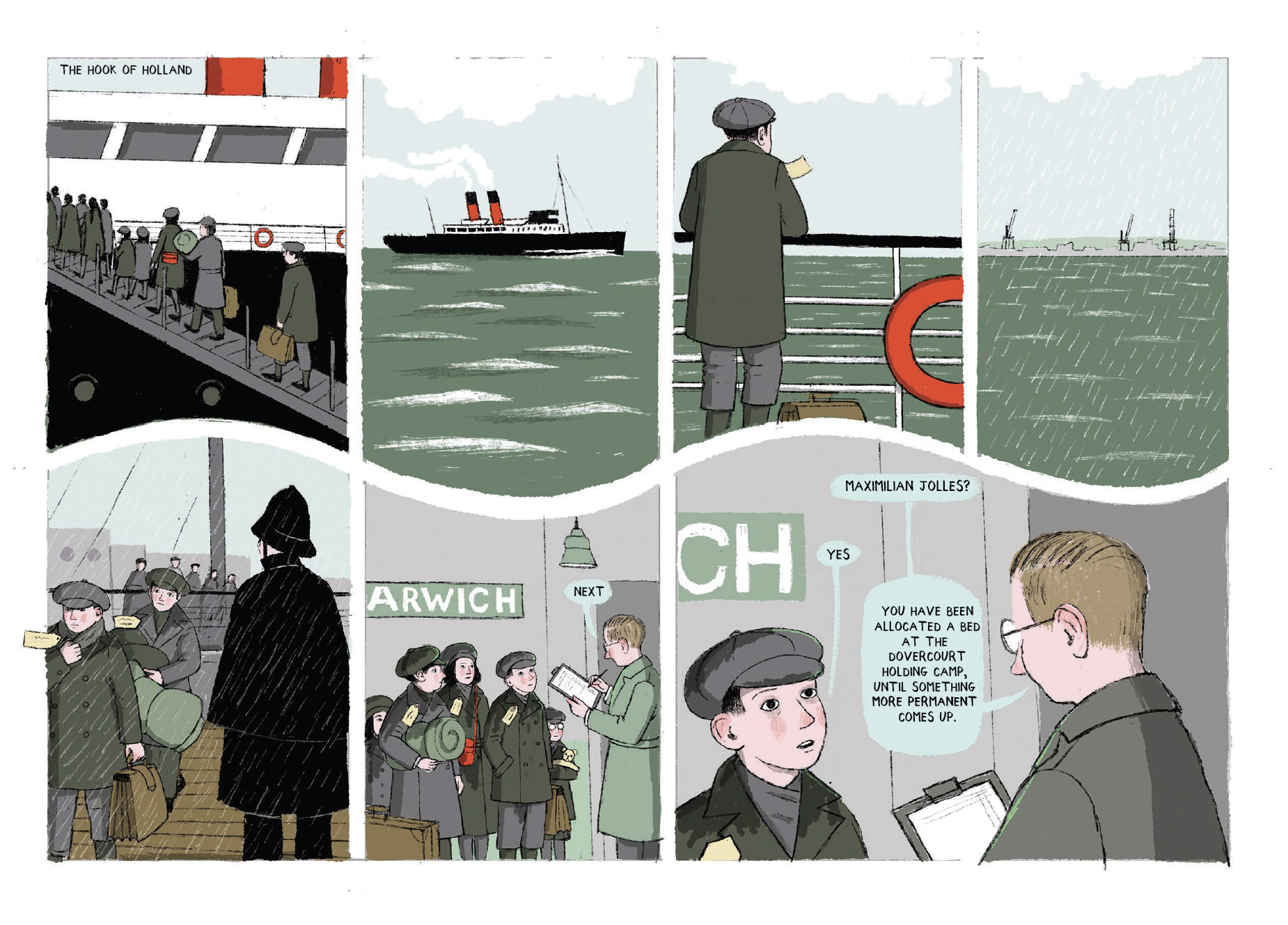
If you lived through 1930’s Europe, the politics, the hatred and the loss of innocence then Max’s story may resonate with you more than those born in the 21st Century. However what Castle is able to do with her art is to frame a period in history that is chilling even today. The matter-of-fact banality of the brutality on show conveys how people are caught up in waves of oppression that pay scant regard to one’s worth and place in the human family. What will happen to Max as a stranger in a strange land. Will Stagdale be his salvation or his undoing? I really want to know, and so will you!


My Book Review for Stagdale Part 1 written and illustrated by Frances Castle can be found on the A.O.I. Blog here.

Wednesday, 25 August 2021

Tuesday, 14 May 2019

My Book Review for The Power and Influence of Illustration by Alan Male

The Power and Influence of Illustration

Written by Alan Male

ISBN: 978-1-3500-2242-3
eBook: 978-1-3500-2411-3

Published by Bloomsbury Visual Arts

Publishers website 

Authors website 

I am an academic, writer and image-maker. When I read the title of this book I was somewhat taken aback. This is because the discipline of illustration has been undervalued and decried for years. Ignored by the public at large and dismissed as merely whimsical by the overinflated purveyors of fine art and graphic design. With the exception of the political cartoon it’s almost invisible to policy makers and economists. I wondered if it was possible to establish exactly how illustration has influenced societies and whether that influence could be attributed to real power. 

This book is organized into 4 chapters, the writing style flows well and is very engaging. This book will help the uninitiated and those contemptuous of the practice to appreciate the complex manner in which illustration reaches its audiences. There has always been a vast array of topics tackled by illustrators over the centuries but these tend not to be collected into one source as has finally happened thanks to Male’s work. I also note that the author quotes his own previous scholarship throughout. This may lead the reader to explore the subject to a greater depth. 

Alan Male’s arguments are most persuasive when set against the origins of art as part of human cultural expression. It is clear that illustration played a key role in the development of education and how we make sense of the world around us. From magical caves to mystical temples, from divinity in stained glass to sacred scrolls; illustration has been employed in the attempt to link our minds to the Gods. 

When he riffs on geopolitics and how todays social media might influence the rise of subversion this is where his thesis gets exciting and I would have liked to read more about this specific part of visual communication. When the artist creates propaganda for regimes just what are his responsibilities? Is anonymity acceptable when your work does potential harm. It is asserted that we must not work in a vacuum and that social and ecological concerns should always impact our decision making. He shows that he appreciates that illustration can be 2D, 3D, 4D and even AI. These technical developments are to be embraced rather than feared. In the latter part of the book he refers to how collaboration has made illustration more visible and this helps to maintain its links to the world of science and technology. His selection of specific images proves this point. The collaborative work of Anna and Elena Balbusso features heavily in these chapters as does that of Paul Davis particularly his #No More Black Targets work. 

I think this book is a compelling addition to Male’s early output and that the new graduate and committed design student would benefit from the knowledge within. The design of the publication shows some improvements on the last book I reviewed by this author but again some graphic vector-based artworks that would work well at the size of a postage stamp were shown at a scale that disadvantaged more delicate linear work that features complex text elements. 

This book contains a broad range of approaches deemed illustration and explains how this work impacts on the wider society. Some of the selected work is beautiful, refined and gives one pause for thought. There is an international selection that adds to the diversity of images on show. I’m still not fully convinced that this book will have a major impact beyond those directly involved in the production of illustration but it is good to see such ambition. Male looks forward to a time when we all become natural polymaths. Power to the people yes but also power to this book.


Saturday, 11 May 2019

My AOI Book Review for Stagdale by Frances Castle

Stagdale

Written and illustrated by Frances Castle

Illustrator’s website https://www.francescastle.com

Last night I dreamed I went to Manderley again. This quote from Daphne Du Maurier’s Rebecca comes to my mind when I reflect on the structure that Frances Castle has constructed for her tale of things remembered past.

In the first part of Stagdale, nostalgia is as vivid as the swallows that dart about in the cauldron heat of the summer of 1975. The drawing style and character design of this credible world combines modulated lines with delicate textures and sumptuous colour with somber tones.

Kathy is uprooted from London by the acrimonious separation of her parents. She has arrived at the place where her mother’s ancestors come from so it’s part homecoming. The Brontésqueatmosphere that Castle conjures out of the hot summer night sky takes me back to the tales I read as a boy and how my imagination soared when I thought of the mysterious world just beyond in the shadows. 

Stagdale is the location deep in the Cumbrian National Park, a picture postcard, chocolate box English Village where all is not well. Castle employs a bright pastel palette for daytime and sultry inky one for night. Colour signifies much more than the passing of time in this story.

While her mother concentrates on making a home for them, Kathy tries to cope in these unfamiliar circumstances. She finds some comfort in her friendship with Joe but the Bloat family who live opposite are proof that she’ll need to keep her wits about her. Working with the familiar tropes that represent English rural life and the stereotypes real or imagined that make things tick Castle positions Kathy into a world where there is an ancient wrong that must be investigated.

The layers of the story are further enhanced by the surprising discovery that many years ago another unhappy child lived in the cottage. Max a boy from Germany has hidden something in the cottage that takes us from rolling English hills to the mechanised jackboot of history. All is certainly not well!

This A5 landscape format aids the sweeping scene depicted on the front and back of the book. The narrative is enhanced by the delicate end papers that contain subtle nods to the events within. Frances’ illustrations are a treat for the eyes and it’s the beautifully crafted details that make this an impressive piece of work. Of particular note for me is the spread showing the centre of the village, with its austere war memorial and ubiquitous shopping trolley half submerged in the river. The village is well maintained on one side but not the other why is this? Inside the Stagedale Stores with its supply of long ago sweets and the strange shadowy figure standing in the back. The Stagdale museum scene with its pitiful contents is still however pregnant with clues. The use of familiar tropes such as lightening and rain help us to appreciate the tension and eeriness of the place especially at night time.

If you were alive in 1970’s Britain the fashions, sweets for sale and the pace of village life will be familiar to you even if you never lived in a village. There is the power of the cultural collective conscience at work here, something that has been lost in modern times. I look forward to reading further chapters from this story to see if Kathy can make a success of her new life, whether she will discover more about Max the German boy and what actually did happen to the Stagdale Jewel!


My Book Review for Grandad Mandela by Zazi, Ziwelene & Zindzi Mandela

Grandad Mandela

Written by Zazi, Ziwelene & Zindzi Mandela

Illustrated by Sean Qualls

ISBN:978-1-78603-136-5

Published by Lincoln Children’s Books


Sean Qualls website https://www.seanqualls.com

Nelson RolihlahlaMandela respectfully known as Mandiba is a personal hero of mine. He is the only politician in human history that I wish I had met in person. This is why I have chosen to review this picture book about his story. I appreciate that what gave him his moral purpose was fully African in nature.

What’s it like when your Great Grandfather was one of the most famous and important people in recent history? You are forced to share your loved one your blood kin with the whole world. A world that is still inspired by the actions and stature of your relative. How do you go about telling your version of his story? The answer is simple you ask your grandmother.

This book has a structured around the answers of the grandmother to the 15 questions set by the great grandchildren. Through these we see how Grandad Mandela lived through childhood, occupation, love, incarceration and final victory. The text in this book is Dodo, it is easy to read and gives the impression of being written by young child. The questions are in a larger point size than the answers. This is clever use of scale because the young reader get to play the game of asking the questions while the adult reader responds by reading the answers. 

This picture book is in the tradition of the improvement narrative. What you learn makes you a better person. Young children will be able to relate to Zazi who is eight and Ziwelene who is six and put themselves into their shoes. This is an important part of the transfer of knowledge, relatability. 

Sean Qualls illustrations are loose, dynamic and direct. Scenes of violence and state oppression. The simple direct figures are somehow more disturbing when they are subjected to aggression and pain. Textures (cracked paint and weathered edges) and immediate painting simplified figures and a controlled colour palatte. His environments are open and descriptive details are there only to express a direct idea. His faces are imbued with emotional resonances despite the simple use of line. 

Now 100 years after birth the legacy of Nelson Mandela can be seen with greater clarity. His example is one to be followed if you believe that humans should live in harmony. He joins the pantheon of Africans that inspired through their stance on civil rights and their uncompromising position. This book is a good start if you wish to understand his long walk to freedom.


Friday, 20 July 2018

My Book Review for The Last Wolf by Mini Grey

The Last Wolf

Written and Illustrated by Mini Grey

ISBN: 978-0-857-55092-7

Published by Penguin Random House UK

Reviewed by Karl Andy Foster


Author website http://minigrey.com

Review

When I was a young boy, many decades ago I would collect my necessary items (stones, catapult, bubble gum and a bottle of pop) and go out first thing to explore the woods behind our house. The first page of this story took me right back to those carefree times when one did indeed hope to find wild animals.

Mini Grey has taken on Little Red Riding Hood, absorbed the story and repurposed the plot so it is more relevant for our present troubling times. She understands the reason for fables. All the characters are well defined and we care about them. Wolf, Lynx and Bear are fully realized charming creatures. The story has an ecological and conservation message that needs to be understood and acted upon.

The direct and graphic cover shows Little Red framed by a triangle and attired for adventure standing in the wood. Above her is the elegiac title, The Last Wolf. The end papers with their spikey green trees signal a fairytale within and this is so. We read a story within a story and flashbacks that are portents of the future. The serif text is crisp, informative and works mainly as captions. 

The sense of place and depth is evident in the paintings. The stand out spreads for me are when Little Red wanders deeper into the forest, when she enters the wolf’s tree cave, the flashback to the heyday of the forest and when the forest is surrounded by the houses. The visual storytelling doesn’t shy away from the realities of a polluted world and nature in crisis.

The split panel spreads work well with funny reveals at the start moving onto the flashbacks to the good old days in the middle and finally showing our impact on the natural world. Like her earlier work the illustrations have a spikey energy. Grey draws animals and trees exquisitely. She has great control over her line work and her autumnal colour palette. Yellows glow and blues show a cold encroaching civilisation. 

It is quite possible that The Last Wolfhas all the hallmarks to become a classic text. A previous winner of the Kate Greenaway Medal in 2007, Grey shows us the world as it is and how it might be. Our imaginations should be the only limitation for children and adults alike because we do need to identify solutions to these complex problems. I believe that for young children this book is a great place to start. 


17 July 2018


Tuesday, 3 July 2018

My Book Review for Reportage Illustration - Visual Journalism by Gary Embury & Marcelo Minichiello

Published:11-01-2018
Format:Paperback 
Edition:1st
Extent:176
ISBN:9781474224598
Imprint:Bloomsbury Visual Arts
Illustrations:200 colour illustration 


Gary Embury and Mario Minichiello have produced a book that works for me and this is why:

It reminds me of my own experience of producing reportage drawing during trips to Barbados, Barcelona, the Greek Islands and New York that is strongly backed up by the editorial tone of this book.

It contains some excellent case studies on artists who know how to capture the live scene. These artists are working across the globe and finding fascinating projects to engage with.

The many interviews attempt to discover the secrets of this skill and explain time and again that preparation is everything. Efficiency in planning is the most important thing we need to consider.

I have seen that Bloomsbury Visual Arts and Bloomsbury Academic books can be weak in page layout and the design front but this time they get it right. I commend them on this and urge them to continue in this vein. This book features some stunning examples of reportage work and the captions help build on the overall message. For me the highlights of this book come through the words and work of Olivier Kugler, Lucinda Rogers, Anne Howeson, Jenny Soep, George Butler and Sue Coe.

This book presents an effective guide to visual journalism. Contextualisation is something that we work hard to help our students to understand so they are able to create useful and original conceptual and practical outcomes. This book gives us a history and evolution of the subject and it respects illustration as an important part of our culture and appreciates that it is at the heart of visual communication.

I really like the reportage exercises in the book and I will soon use these with my illustration and visual media students. It also reminded me of the importance of direct observation drawing. This is a skill that takes focused concentration and application to achieve credible results.

This book makes clear the strong case for when observed drawing is superior to photography, cinematography and written journalism.

This book will be useful for academics and those who understand the reason for ‘dirtying the paper.’ It also explores the meaning of image making through the use of historical and contemporary examples. Reportage is an enterprise that has remained relevant and important despite the preponderance of 24/7 news (fake or otherwise) and our changing social interactions. So, go on location, start drawing and count how many people interact with you. They usually talk about their own lapsed drawing practice. I say take every opportunity that you can to get people talking about the making of art.

Karl Foster Monday 26 March 2018