Showing posts with label Nostalgia. Show all posts

Monday, 28 March 2022

My Book Review for Stagdale Part 2 written and illustrated by Frances Castle


Reviewed by Karl Anderson Foster in November 2021.
Frances Castle's website https://www.francescastle.com 

Writing in a diary is a really strange experience for someone like me. Not only because I’ve never written anything before, but also because it seems to me that later on neither I nor anyone else will be interested in the musings of a thirteen-year old school girl. Oh well, it doesn’t matter. I feel like writing.

The Diary of Anne Frank


What comes to one’s mind when one is reminded of things remembered past?

In the second part of the graphic novel Stagdale, the setting is the bitter cold autumn of 1938. The air is still apart from the noise of a burning city just beyond the doors of our protagonist Max’s home. Max and his family face an impossible situation, all is not well. It is Kristallnacht a time of grave danger in Germany for many peoples.


The days after Kristallnacht Max and his family try to remain calm as they are imprisoned in their home apart from fraught trips to gather essential supplies. While his mother concentrates on making a home for them, Max watches a world outside that he no longer understands. We know how he is feeling because he writes about it in his diary that he has been asked to keep in order to practice the English language.


Max is uprooted from Berlin due to the rise of the Nazi party and its followers in Germany. We are witness to his gruelling journey across national borders during a period of extreme nationalism that will bring the world to its knees. Max is on his way to Stagdale, England though he doesn’t know it yet.


I think that the A5 landscape format works even better in Part 2 of the series as it reminds me of old photographs spread out in front of me as you try to knit together the stories of family and friends. Again Castle’s’ illustrations are a treat for the eyes and it’s the beautifully crafted details that evoke a time long gone by but they are still modern and prescient. The drawing style and character design of this complex world combines modulated lines with delicate textures juxtaposed with faded colours and sombre earthy tones.


Two scenes in particular leave me with anxiety in my chest and then a lump in my throat. When the Soldiers come to take Max and his parents away at the start of the story. You wonder if things will be over before we start and when Max says goodbye to his parents at the train station before embarking on the Kinder Transport. Max’s train journey fills one with a sense of the danger as our youngster leaves the bosom of the family for the truly unknown. Border guards are genuinely scary and unpleasant. Max has to learn how to survive fast as he realises that his wits are all that stand between him and calamity.

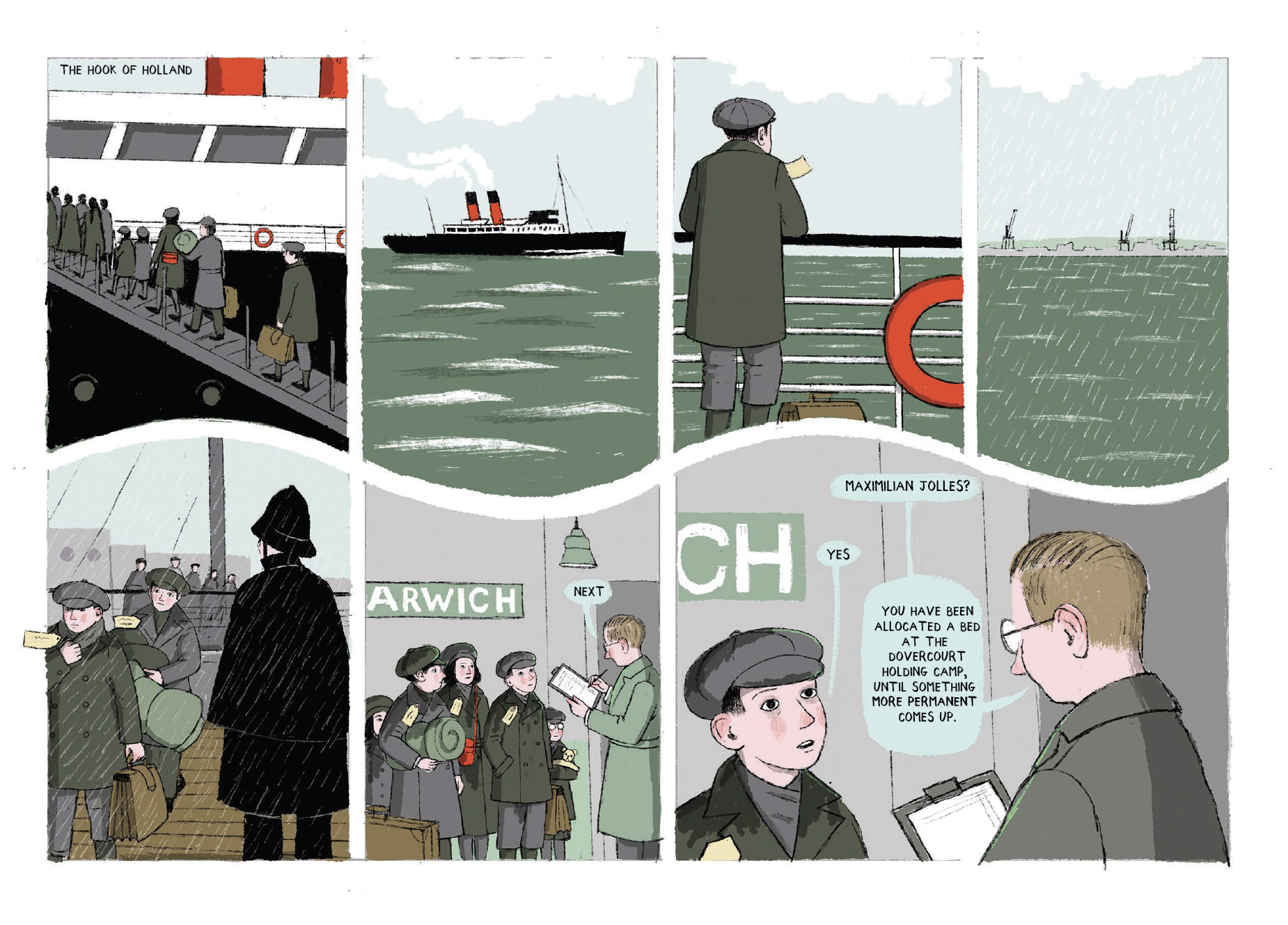
If you lived through 1930’s Europe, the politics, the hatred and the loss of innocence then Max’s story may resonate with you more than those born in the 21st Century. However what Castle is able to do with her art is to frame a period in history that is chilling even today. The matter-of-fact banality of the brutality on show conveys how people are caught up in waves of oppression that pay scant regard to one’s worth and place in the human family. What will happen to Max as a stranger in a strange land. Will Stagdale be his salvation or his undoing? I really want to know, and so will you!


My Book Review for Stagdale Part 1 written and illustrated by Frances Castle can be found on the A.O.I. Blog here.

Saturday, 11 May 2019

My AOI Book Review for Stagdale by Frances Castle

Stagdale

Written and illustrated by Frances Castle

Illustrator’s website https://www.francescastle.com

Last night I dreamed I went to Manderley again. This quote from Daphne Du Maurier’s Rebecca comes to my mind when I reflect on the structure that Frances Castle has constructed for her tale of things remembered past.

In the first part of Stagdale, nostalgia is as vivid as the swallows that dart about in the cauldron heat of the summer of 1975. The drawing style and character design of this credible world combines modulated lines with delicate textures and sumptuous colour with somber tones.

Kathy is uprooted from London by the acrimonious separation of her parents. She has arrived at the place where her mother’s ancestors come from so it’s part homecoming. The Brontésqueatmosphere that Castle conjures out of the hot summer night sky takes me back to the tales I read as a boy and how my imagination soared when I thought of the mysterious world just beyond in the shadows. 

Stagdale is the location deep in the Cumbrian National Park, a picture postcard, chocolate box English Village where all is not well. Castle employs a bright pastel palette for daytime and sultry inky one for night. Colour signifies much more than the passing of time in this story.

While her mother concentrates on making a home for them, Kathy tries to cope in these unfamiliar circumstances. She finds some comfort in her friendship with Joe but the Bloat family who live opposite are proof that she’ll need to keep her wits about her. Working with the familiar tropes that represent English rural life and the stereotypes real or imagined that make things tick Castle positions Kathy into a world where there is an ancient wrong that must be investigated.

The layers of the story are further enhanced by the surprising discovery that many years ago another unhappy child lived in the cottage. Max a boy from Germany has hidden something in the cottage that takes us from rolling English hills to the mechanised jackboot of history. All is certainly not well!

This A5 landscape format aids the sweeping scene depicted on the front and back of the book. The narrative is enhanced by the delicate end papers that contain subtle nods to the events within. Frances’ illustrations are a treat for the eyes and it’s the beautifully crafted details that make this an impressive piece of work. Of particular note for me is the spread showing the centre of the village, with its austere war memorial and ubiquitous shopping trolley half submerged in the river. The village is well maintained on one side but not the other why is this? Inside the Stagedale Stores with its supply of long ago sweets and the strange shadowy figure standing in the back. The Stagdale museum scene with its pitiful contents is still however pregnant with clues. The use of familiar tropes such as lightening and rain help us to appreciate the tension and eeriness of the place especially at night time.

If you were alive in 1970’s Britain the fashions, sweets for sale and the pace of village life will be familiar to you even if you never lived in a village. There is the power of the cultural collective conscience at work here, something that has been lost in modern times. I look forward to reading further chapters from this story to see if Kathy can make a success of her new life, whether she will discover more about Max the German boy and what actually did happen to the Stagdale Jewel!